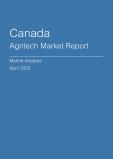
Executive Summary: Agritech Market in Canada - Q1 2025
The first quarter of 2025 marks a pivotal moment for the Agritech Canada market, with significant developments in precision agriculture, controlled environment agriculture, and agricultural biotechnology. The Canadian agritech industry is experiencing transformative growth driven by technological advancements, government incentives, and evolving consumer preferences.
Key Developments in Precision Agriculture Technologies
The adoption of precision agriculture technologies in Canada is accelerating, driven by the need for efficient resource management and sustainability. Technologies such as GPS-guided equipment, drones, and data analytics software are being integrated into farming practices. These innovations enhance productivity and reduce environmental impact through optimized use of inputs like water and fertilizers. Government initiatives, including the Canadian Agricultural Partnership, are vital in supporting this growth, fostering a robust environment for innovation in digital farming.
Growth in Controlled Environment Agriculture and Vertical Farming
Controlled Environment Agriculture (CEA), including vertical farming and hydroponics, is expanding in Canada to meet the rising demand for sustainably produced and locally sourced food. Companies like GoodLeaf Farms are at the forefront, utilizing CEA to ensure year-round access to fresh produce with minimal environmental impact. This sector benefits from both government support and technological advancements, which reduce water usage by up to 97% compared to conventional methods.
Impact of Climate Change on Agritech Innovations
Climate change continues to be a catalyst for innovation within the Canadian agritech sector. The development of drought-resistant crops and advanced irrigation systems is crucial for maintaining productivity under changing weather conditions. Efforts by institutions like the University of Saskatchewan's Crop Development Centre highlight Canada's leadership in agricultural biotechnology, focusing on breeding resilient crop varieties.
Advancements in Agricultural Drones and IoT in Agriculture
Agricultural drones and the Internet of Things (IoT) are becoming indispensable in Canadian agriculture. Drones enhance crop monitoring and precision farming techniques, while IoT devices facilitate data-driven decision-making by collecting real-time data on soil and crop health. These technologies not only optimize resource use but also contribute to increased yields and sustainable farming practices.
Challenges and Opportunities in Agritech Adoption
Despite the promising developments, Canadian farmers face challenges in adopting new agritech solutions due to high costs and technical expertise gaps. Initiatives like training programs and financial support from the Canadian Agricultural Partnership aim to bridge these gaps, promoting broader adoption of advanced technologies and ensuring the competitiveness of Canadian agriculture.
Government Incentives and Economic Context
The Canadian government plays a crucial role in fostering agritech innovation through funding programs and incentives. The Strategic Innovation Fund and Canadian Agricultural Partnership provide substantial support, encouraging investment in new technologies. Additionally, the Bank of Canada's interest rate cuts lower capital costs, offering a conducive environment for agritech firms to invest in R&D and expand their operations.
Key Questions Addressed by the Report
- What are the current trends in precision agriculture technologies in Canada?
- How is controlled environment agriculture evolving in the Canadian market?
- What impact does climate change have on agritech innovations in Canada?
- How are agricultural drones and IoT being integrated into Canadian farming practices?
- What challenges do Canadian farmers face in adopting new agritech solutions?
- What government incentives are available to support agritech innovation in Canada?
- How do economic factors like interest rates and inflation impact the agritech sector?