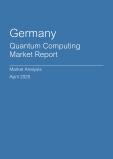
Executive Summary for Germany Quantum Computing Market Report - Q1 2025
The Germany Quantum Computing market is experiencing significant growth in Q1 2025, driven by advancements in both quantum hardware and software. Germany is solidifying its position as a global leader in the quantum computing sector, with substantial contributions from industry collaborations and government initiatives.
Advancements in Quantum Hardware and Software
Germany's progress in quantum hardware and software is catalyzing market growth. Notable developments include Forschungszentrum Jülich's acquisition of D-Wave's Advantage™ Quantum Computer, marking a milestone in high-performance computing centers. This advancement supports breakthroughs in AI and quantum optimization applications, highlighting Germany's commitment to integrating cutting-edge quantum technology.
Emerging Applications in Key Industries
The integration of quantum computing across pharmaceuticals, finance, and logistics is transforming these sectors. In pharmaceuticals, quantum algorithms accelerate drug discovery, reducing time and costs. The finance sector benefits from enhanced risk management through quantum computing and AI integration, while logistics leverage quantum algorithms for supply chain optimization, improving efficiency and cost savings.
Collaborations Driving Innovation
Collaborations are crucial in advancing the quantum computing market in Germany. Partnerships, such as Lufthansa's with the German Aerospace Center and Kipu Quantum, demonstrate practical applications in air traffic management. These alliances underscore the role of quantum computing in enhancing operational efficiencies and strategic planning.
Government Initiatives and Regulatory Landscape
The German government is actively supporting the quantum sector through increased funding and strategic initiatives. This includes modifying fiscal policies to facilitate investments in infrastructure and technology, crucial for the advancement of quantum computing. However, regulatory challenges such as GDPR compliance and cybersecurity concerns remain significant.
Economic Context and Market Potential
Germany's stable inflation rate of 2.3% in Q1 2025 provides a favorable environment for technological investments. Despite rising unemployment, the quantum computing industry is poised for growth, driven by strategic investments and collaborations. The modest GDP growth forecast of 0.3% highlights economic challenges, but also potential recovery avenues for technology investments.
Competitive Landscape
The competitive landscape in Germany's quantum computing market features key players like IBM, Google, D-Wave Systems, Rigetti Computing, and IQM Quantum Computers. These companies are leveraging strategic partnerships and technological advancements to enhance their market positions. Notably, IBM's focus on AI and cloud services, and IQM's involvement in Germany's quantum ecosystem, showcase the dynamic nature of the market.
Key Questions the Report Addresses
- What are the latest advancements in quantum hardware and software in Germany?
- How are key industries like pharmaceuticals, finance, and logistics integrating quantum computing?
- What role do collaborations and partnerships play in Germany's quantum computing market?
- How are government initiatives influencing the market, and what regulatory challenges exist?
- What is the economic context impacting the quantum computing sector in Germany?
- Who are the major players in the competitive landscape, and what are their strategies?
By addressing these questions, the report provides a comprehensive overview of the Germany Quantum Computing market in Q1 2025, offering insights into the sector's growth trajectory and strategic directions.