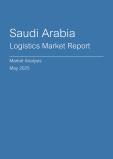
Executive Summary: Logistics Market in Saudi Arabia Q1 2025
The logistics market in Saudi Arabia during Q1 2025 is characterized by significant advancements across various sectors, driven by strategic partnerships, technological integration, and regulatory changes. The Kingdom's Vision 2030 initiatives continue to play a crucial role in shaping the logistics landscape, with a focus on economic diversification and the development of sustainable infrastructure.
Enhancements in Agricultural and Cold Chain Logistics
Key developments in agricultural logistics include a strategic partnership between the Riyadh Development Company and the Saudi Agricultural and Livestock Investment Company (SALIC), aimed at improving logistics infrastructure for fresh produce distribution. This collaboration focuses on modernizing sorting centers and storage warehouses, enhancing supply chain efficiency and sustainability. Additionally, advancements in cold chain logistics have improved the distribution of temperature-sensitive goods such as pharmaceuticals and fresh produce, supporting Saudi Arabia's Vision 2030 sustainability goals.
Integrated Land-Sea Logistics and 3PL Market Dynamics
Roll Group's investments in integrated land-sea logistics, particularly in industrial hubs like Jubail, have enhanced the efficiency of transporting oversized and heavy cargoes. This development supports the heavy industries and aligns with the Kingdom's objective to become a global logistics hub. The third-party logistics (3PL) market is also witnessing increased outsourcing, as companies seek to optimize logistics management and focus on core business activities.
E-commerce and Last Mile Delivery Innovations
The e-commerce logistics sector is experiencing rapid growth, driven by the expansion of the digital marketplace and online retail. Companies like Saudi Post and Aramex are advancing last-mile delivery solutions, utilizing technologies such as automated sorting systems and real-time tracking to meet consumer expectations for rapid and reliable service. Urban centers like Riyadh and Jeddah are becoming focal points for logistics innovation, with investments in local distribution hubs to reduce delivery times.
Technological Integration and Sustainable Logistics Practices
Saudi Arabia's logistics sector is integrating advanced technologies like AI, IoT, and blockchain to optimize supply chain efficiency and transparency. These technologies enhance operational performance and meet the growing demands of market segments. Sustainable logistics practices are being prioritized, with initiatives aimed at reducing environmental impact, such as the development of modern sorting centers and the optimization of transport routes to reduce emissions.
Regulatory Changes and Economic Context
Regulatory changes in Q1 2025 have impacted transportation safety and customs procedures, streamlining operations and enhancing the efficiency of logistics services. Additionally, economic factors such as oil price fluctuations and inflation are influencing logistics costs and investment capacities. The stable exchange rate of the Saudi Riyal against the US Dollar has helped manage import costs, while foreign investments continue to bolster the logistics infrastructure in line with Vision 2030.
Questions the Report Aims to Answer
- What are the recent advancements in the logistics infrastructure of Saudi Arabia?
- How are strategic partnerships influencing the logistics market in Saudi Arabia?
- What role do technological integrations play in optimizing logistics operations?
- How is the e-commerce boom affecting last-mile delivery and logistics services?
- What are the impacts of regulatory changes on logistics efficiency and safety?
- How do economic factors like oil prices and inflation affect the logistics sector?
- What sustainability initiatives are being implemented in the logistics industry?