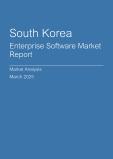
Executive Summary: Enterprise Software Market in South Korea - Q4 2024
The South Korean enterprise software market in the fourth quarter of 2024 has been characterized by significant advancements and strategic shifts, driven by technological innovations, economic factors, and evolving business needs. This report delves into the key trends and market dynamics shaping the enterprise software landscape in South Korea, highlighting the major segments impacting the market.
Key Market Trends and Segments
Integration of AI and Machine Learning
South Korean companies are increasingly integrating AI and machine learning into their enterprise software solutions. Initiatives such as KT's partnership with Microsoft to develop a Korea-specific AI model highlight the trend towards localized AI solutions, expected to enhance productivity and operational efficiency across various industries.
Growth of SaaS and Cloud Solutions
The adoption of Software as a Service (SaaS) and cloud-based solutions continues to rise, driven by innovations from companies like YYSOFT and Gadget Korea. These firms are incorporating AI and blockchain technologies to optimize supply chain management and enhance global connectivity, positioning South Korea as a significant player in the global SaaS market.
Influence of the Semiconductor Industry
South Korea's semiconductor sector significantly impacts the enterprise software market, with robust export performance driving demand for software solutions that manage complex manufacturing and supply chain operations. Geopolitical tensions have also accelerated the need for sophisticated enterprise software to navigate supply chain disruptions.
Demand for CRM and ERP Solutions
There is a notable increase in demand for Customer Relationship Management (CRM) and Enterprise Resource Planning (ERP) systems. Businesses are leveraging CRM tools to enhance customer engagement, while ERP systems are being integrated with AI technologies to optimize supply chain management and improve operational efficiency.
Impact of Regulations and Economic Policies
New data privacy and security regulations are shaping the enterprise software market, with companies investing in compliance-driven cybersecurity solutions. The Bank of Korea's interest rate cuts are expected to boost technology investments, making enterprise software solutions more attractive to cost-conscious businesses.
Questions This Report Addresses
- How are AI and machine learning being integrated into enterprise software solutions in South Korea?
- What are the growth prospects for SaaS and cloud solutions in the South Korean market?
- How is the semiconductor industry influencing the demand for enterprise software?
- What is driving the increased demand for CRM and ERP solutions in South Korea?
- What impact are new regulations and economic policies having on the enterprise software market?
- How are geopolitical tensions affecting cybersecurity demand in the enterprise software sector?
- What role does foreign labor play in the adoption of HRM software in South Korea?
Conclusion
The enterprise software market in South Korea is poised for growth, driven by technological advancements, economic policies, and evolving business needs. As companies continue to integrate AI and cloud solutions, the demand for sophisticated enterprise software that enhances operational efficiency and competitiveness is expected to rise. Understanding these dynamics is crucial for stakeholders aiming to capitalize on opportunities within this dynamic market landscape.