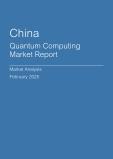
Executive Summary: Quantum Computing in China - 2024 Q4
In the fourth quarter of 2024, the quantum computing landscape in China is marked by significant advancements and strategic initiatives, solidifying its position as a global leader in quantum technology. The market is driven by robust government investments and growing demand across key sectors such as finance, defense, and manufacturing. Key players in the industry, including Alibaba, Tencent, and Baidu, are leveraging their technological capabilities to expand their influence both domestically and internationally.
Market Dynamics and Industry Trends
China's quantum computing sector is experiencing dynamic growth, fueled by government policies that emphasize technological self-reliance and strategic trade partnerships. The Chinese government has allocated substantial resources to research and development in quantum technologies, reflecting a commitment to maintaining its competitive edge. Despite geopolitical tensions and trade disputes with the US and EU, China continues to foster international collaborations, especially with emerging markets like Brazil and ASEAN countries, to diversify its export markets and reduce reliance on Western economies.
Advancements in Quantum Hardware and Software
The fourth quarter of 2024 has seen notable advancements in quantum hardware and software in China. Companies like Origin Quantum have made significant strides in developing high-performance quantum chips, while Baidu and Alibaba are pioneering in quantum algorithms and software development. The focus on quantum hardware is further supported by China's robust manufacturing capabilities, allowing rapid scaling of production. Meanwhile, the launch of national programs for quantum software development underscores China's strategic emphasis on integrating quantum algorithms into its industrial applications, thereby enhancing its competitive edge in the global market.
Growth of Quantum Cloud Computing and Services
Quantum cloud computing and services are witnessing substantial growth in China, driven by increasing demand from industries such as finance, logistics, and pharmaceuticals. Alibaba and Baidu are at the forefront of providing quantum cloud services, capitalizing on their existing cloud infrastructure to deliver innovative solutions. Government initiatives aimed at fostering innovation and reducing dependency on foreign technology have further accelerated the growth of domestic providers, positioning China as a formidable contender in the global quantum cloud market.
Challenges and Opportunities in the Quantum Computing Market
The Chinese quantum computing industry faces several challenges, including talent shortages and regulatory constraints, which could impede growth if not addressed effectively. The shortage of skilled professionals in quantum computing is a significant hurdle, exacerbated by global competition for talent. Additionally, regulatory frameworks need to adapt quickly to keep pace with technological advancements, ensuring a conducive environment for innovation. Despite these challenges, the opportunities are vast, with potential for expansion into new sectors and international markets, driven by China's strategic focus on self-reliance and technological leadership.
Questions This Report Answers
- What are the current trends and dynamics in the quantum computing market in China as of Q4 2024?
- How are major companies like Alibaba, Tencent, and Baidu impacting the quantum computing industry in China?
- What advancements have been made in quantum hardware and software in China during this period?
- How is the growth of quantum cloud computing and services shaping China's technological landscape?
- What are the primary challenges facing the quantum computing industry in China, and how are they being addressed?
- What strategic initiatives are being implemented to enhance China's position in the global quantum computing market?