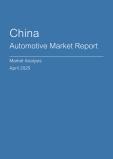
Executive Summary: China's Automotive Market in Q1 2025
The first quarter of 2025 marked a dynamic period for China's automotive market, characterized by significant advancements in electric vehicles (EVs), connected cars, and autonomous driving technologies. China's automotive industry continues to lead globally in EV production, driven by robust domestic demand, technological innovation, and strong governmental support. Companies like BYD and NIO have emerged as key players, capitalizing on these trends to expand both domestically and internationally.
Expansion of Electric Vehicles in China
China's electric vehicle market experienced substantial growth in Q1 2025, supported by government incentives and consumer preference for sustainable transportation. Sales of new energy vehicles (NEVs) surged, showcasing the effectiveness of policies promoting green technologies. Local manufacturers such as BYD and NIO leveraged advancements in battery technology and autonomous systems to gain a competitive edge, not only in China but on the global stage as well.
Challenges and Opportunities in the Traditional Automotive Segment
The traditional automotive segment faced pressures as the shift toward EVs intensified. Sales of gasoline-powered vehicles declined, prompting manufacturers to invest in hybrid technologies and enhance their EV portfolios. Companies like Geely and SAIC are focusing on hybrid innovations and partnerships to remain competitive amid stringent emission standards and evolving consumer preferences.
Trade Tensions and Their Impact on China's Automotive Sector
Ongoing trade tensions with the United States have increased production costs for Chinese automakers, affecting their operational strategies. These tensions have accelerated efforts to diversify supply chains and focus on the domestic and European markets, where demand for sustainable vehicles is rising. Despite challenges, the sector remains resilient, supported by government incentives and the growing global emphasis on NEVs.
Performance of Luxury and Commercial Vehicle Segments
The luxury vehicle market in China witnessed the rise of domestic brands challenging international competitors, driven by technological advancements and consumer preferences for high-tech solutions. Additionally, the commercial vehicle sector is transitioning towards zero-emission solutions, reflecting China's leadership in producing and adopting electric trucks and hydrogen fuel cell vehicles.
Innovation and Integration of Smart Technologies
China's automotive market is at the forefront of integrating smart technologies, with significant advancements in AI and IoT enhancing the user experience and vehicle performance. Leading automakers are collaborating with tech firms to develop connected and autonomous vehicles, setting new standards in vehicle safety and efficiency.
Government Policies Supporting Automotive Innovation
The Chinese government's ongoing support through subsidies and regulatory frameworks continues to play a crucial role in advancing the automotive sector. Policies aimed at reducing emissions and enhancing R&D capabilities are fostering innovation, positioning China as a leader in the global shift towards sustainable automotive solutions.
Key Questions Addressed by this Report
- What are the current trends in China's automotive market for Q1 2025?
- How are electric vehicles impacting the traditional automotive segment in China?
- What are the effects of trade tensions on China's automotive industry?
- How are luxury and commercial vehicle segments evolving in the Chinese market?
- What role do government policies play in supporting automotive innovation in China?
- How are smart technologies transforming China's automotive sector?