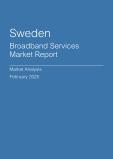
Executive Summary: Broadband Services in Sweden - Q4 2024
The Swedish broadband services market in Q4 2024 is characterized by significant advancements, driven by evolving consumer preferences and technological innovations. The market continues to see a strong preference for fiber broadband over traditional DSL, with residential and business sectors showing increased demand for high-speed internet solutions. Key players, including Telia Company, Telenor ASA, and Bahnhof AB, are actively enhancing their service offerings and expanding their infrastructure to meet this growing demand.
Growth and Shifts in Broadband Subscriptions
In Q4 2024, Sweden's broadband services market continues to experience a surge in fixed broadband subscriptions, particularly fiber optic internet, as consumers and businesses alike seek faster and more reliable connections. This shift is a result of technological advancements and the declining preference for DSL, which is becoming obsolete due to its limited bandwidth capacity. The influence of major players like Telia Company and Bahnhof AB is notable as they expand their fiber networks to capture the growing demand.
Technological Advancements Shaping the Market
Technological innovation is a critical driver in the Swedish broadband market, with Ericsson leading the way through significant R&D investments in 4G and 5G network technology. The rollout of 5G networks is expected to revolutionize broadband services, offering enhanced speed and reliability that cater to both residential and enterprise internet services. This technological evolution is essential for providers to remain competitive and meet the rising expectations of consumers for superior connectivity.
Market Dynamics and Competition
The competitive landscape of Sweden's broadband services market is notably shaped by the strategic actions of major players such as Telia Company and Bahnhof AB. These companies are leveraging technological innovations and strategic investments to enhance service quality and reduce pricing, fostering an environment of intense broadband competition. This competitive pressure ensures that broadband services remain accessible and continue to improve in quality, contributing to a digitally inclusive Sweden.
Residential and Business Broadband Demand
The demand for residential broadband remains robust, driven by the rise in remote work and digital services. With a broadband penetration rate nearing 100%, providers are focusing on expanding fiber broadband to meet the needs of households seeking high-speed, reliable home internet services. Similarly, business broadband demand is increasing due to growing international trade and the shift towards hybrid work models, necessitating secure and efficient enterprise internet services.
Regulatory and Economic Impacts
Recent regulatory developments in Sweden are focused on expanding broadband infrastructure, particularly fiber optic networks, to ensure equal access to high-speed internet across urban and rural areas. These initiatives align with the government's economic goals and are supported by favorable monetary policies, such as interest rate cuts by the Riksbank, which facilitate investment in broadband infrastructure by reducing borrowing costs.
Key Questions Addressed in This Report
- How are technological advancements influencing broadband services in Sweden?
- What are the primary factors driving the shift from DSL to fiber and cable broadband?
- How are major broadband providers adapting to meet the growing demand for high-speed internet?
- What is the impact of regulatory developments on broadband infrastructure investment?
- How is the competitive landscape evolving among Sweden's internet service providers?
- What are the implications of economic conditions on broadband service uptake and expansion?