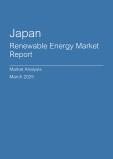
Overview of Japan's Renewable Energy Market in Q4 2024
In the fourth quarter of 2024, Japan's renewable energy market experienced significant growth, primarily driven by robust government policies and technological advancements across key segments such as solar, wind, and bioenergy. The country's ambitious target to achieve 40-50% renewable energy in its electricity mix by 2040 has led to substantial investments and strategic initiatives aimed at expanding the renewable energy footprint.
Solar Energy Advancements in Japan
Solar energy has seen remarkable progress in Japan, with advancements in perovskite solar cells playing a pivotal role. These cells offer a lightweight, flexible alternative to traditional silicon-based panels, making them ideal for urban applications. As of 2023, solar energy accounted for nearly 10% of Japan's total energy production, reflecting a significant increase in adoption rates.
Wind Energy Developments
Japan's wind energy sector, particularly offshore wind projects, has gained momentum due to government support through regulatory simplifications and financial incentives. Strategic investments and partnerships, such as Kansai Electric Power's involvement in offshore wind projects, highlight the sector's growth potential and its contribution to Japan's renewable energy goals.
Bioenergy and Biomass Innovations
Bioenergy, with a focus on algae biofuels, is emerging as a promising area in Japan's renewable energy landscape. Government initiatives and supportive policies are driving market growth, positioning Japan as a key player in the Asia-Pacific biofuel market. These efforts are aligned with Japan's commitment to carbon neutrality by 2050.
Energy Storage Solutions
Energy storage technologies, such as aqueous zinc flow batteries, are becoming increasingly important for Japan's renewable energy market. These solutions are critical for balancing supply and demand within the energy grid, supporting Japan's efforts to integrate more renewable sources into its energy mix.
Green Hydrogen and Marine Energy Initiatives
Japan is intensifying its focus on green hydrogen technologies as part of its broader energy transition strategy. The development of a green hydrogen production facility in Fukushima Prefecture exemplifies the country's commitment to advancing hydrogen as a clean energy source. Additionally, Japan is exploring marine energy, leveraging its extensive coastline to harness tidal and wave energy.
Renewable Energy Policy and Economic Impact
Japan's renewable energy expansion is bolstered by comprehensive government policies, including the Green Growth Strategy, which provides incentives for renewable energy investments. These policies are designed to stimulate innovation and attract investment, ensuring that Japan remains a leader in the global energy transition.
Key Questions the Report Addresses
- How is Japan progressing towards its renewable energy targets for 2040?
- What technological advancements are driving growth in the solar and wind energy sectors?
- How are government policies shaping the renewable energy landscape in Japan?
- What are the emerging trends in bioenergy and energy storage solutions?
- What role does green hydrogen play in Japan's energy transition strategy?
- How is marine energy being integrated into Japan's renewable energy mix?