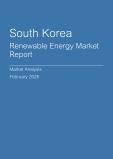
Executive Summary: Renewable Energy in South Korea - 2024 Q4
In the fourth quarter of 2024, South Korea's renewable energy sector has demonstrated significant advancements and strategic initiatives, driven by government support and corporate investments. Key developments have been observed in offshore wind energy, green hydrogen projects, and technological advancements in solar panels and energy storage systems. These efforts are crucial for achieving South Korea's renewable energy targets and transitioning towards a more sustainable energy infrastructure. The country's renewable energy industry is poised for growth, influenced by favorable policies and economic trends despite global economic challenges.
Offshore Wind Energy and Strategic Joint Ventures
One of the most notable events in Q4 2024 is the formation of the Moondo Offshore Wind Energy (MOWE) joint venture, an 840-MW offshore wind project by SRE Group and Moondo Wind Energy. This initiative represents a substantial addition to South Korea's wind energy capacity and aligns with the country's goals to expand its renewable energy mix. The project highlights the potential of offshore wind energy as a cornerstone of South Korea's renewable energy strategy, potentially attracting further investments and enhancing technological capabilities.
Green Hydrogen Initiatives and International Collaborations
South Korea is making significant strides in green hydrogen technology, supported by substantial government investments and international collaborations. With a focus on achieving carbon neutrality by 2050, the government has allocated over $2 billion towards hydrogen projects. This investment is expected to foster domestic economic growth and create job opportunities, positioning South Korea as a leader in hydrogen technology. Collaborations with countries like Australia and Japan are enhancing the country's capacity to develop and export hydrogen technologies.
Technological Advancements in Solar Energy
In Q4 2024, South Korean companies such as LG Electronics and Hanwha Q Cells have made significant advancements in high-efficiency solar panels, achieving efficiency rates exceeding 22%. These innovations are crucial for enhancing solar energy output and reliability, making solar power a more viable option both domestically and internationally. The advancements are expected to drive competition in the global solar energy market and support South Korea's renewable energy targets.
Progress in Energy Storage and Management Technologies
The development of off-grid energy storage systems is gaining prominence in South Korea, supporting the expansion of renewable energy initiatives, particularly in remote areas. These systems are integral to capturing and storing energy from renewable sources, ensuring a stable power supply. Additionally, the integration of smart grid technologies is enhancing energy efficiency and grid stability, pivotal for accommodating the increasing share of renewables in the national energy mix.
Government Policies and Market Opportunities
South Korea's government has reinforced its commitment to renewable energy through a series of policies and incentives, aiming for a 20% share of renewables in the energy mix by 2030. Financial incentives, regulatory reforms, and international collaborations are designed to stimulate market growth and attract investments. These efforts are expected to drive innovation and expansion in the renewable energy sector, positioning South Korea as a competitive player in the global market.
Key Questions Addressed in the Report
- What are the latest developments in South Korea's offshore wind energy sector, and how do they impact the national renewable energy goals?
- How is South Korea advancing in green hydrogen technologies, and what are the implications for the energy industry?
- What technological advancements in solar energy are South Korean companies achieving, and what is their global impact?
- How are smart grid and energy storage technologies being integrated into South Korea's renewable energy infrastructure?
- What government policies are supporting renewable energy development in South Korea?
- How are global economic conditions affecting investments and growth in South Korea's renewable energy market?
Conclusion
The fourth quarter of 2024 marks a pivotal period for South Korea's renewable energy sector, characterized by strategic developments in wind, solar, and hydrogen technologies. Government initiatives and corporate investments are driving growth and innovation, enhancing the country's capacity to meet its renewable energy targets. Despite global economic challenges, South Korea remains committed to advancing its renewable energy industry, promising a sustainable and resilient energy future.